
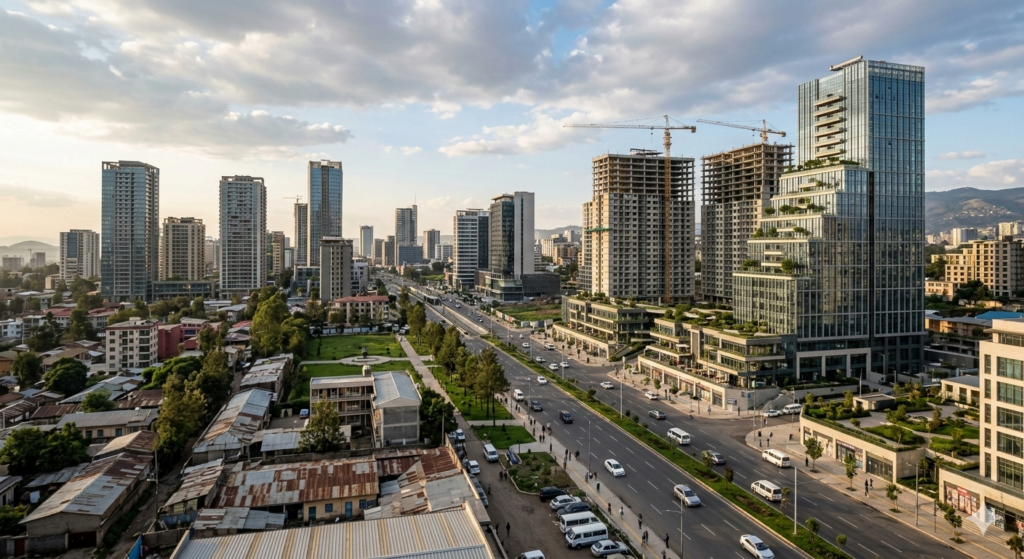
Addis Ababa Real Estate: 2026 Investment Guide
The landscape of Addis Ababa Real Estate is changing rapidly. As we move through 2026, the Homegrown Economic Reform (HGER 2.0) and the Corridor Development Project have become market realities. Consequently, the rules for property owners and investors have shifted.
At Megabet Property Management, we track these shifts daily. Whether you manage a luxury G+2 in Bole Bulbula or navigate new laws, understanding the market is essential.
“Modern developments transforming Addis Ababa Real Estate in 2026”)
1. Why Addis Ababa Real Estate is a Top Investment
The 2018 reform opened the door. However, the 2026 agenda has taken the hinges off entirely. Ethiopia is now a prime destination for Foreign Direct Investment (FDI) in Africa. Specifically, the country has attracted billions in capital recently.
Furthermore, international banks are finally entering the market. As a result, we see better financing options and stable currency policies. For official updates on these national financial reforms, you can review the latest reports from the Ethiopian Investment Commission.
2. Corridor Development: Creating a Livable City
If you have driven through Piassa or Kazanchis lately, you have seen the change. The city has upgraded over 130 kilometers of central roads. Because modern apartments are replacing old structures, property values have jumped significantly.
Moreover, the 2026 market highly rewards “walkable” areas. For instance, properties near new bike lanes and green parks have much higher rental demand. Since road access has improved, eastern corridors like Ayat are now top choices.
“New urban corridors boosting Addis Ababa Real Estate values”)
3. Historic Legal Shifts for Addis Ababa Real Estate
Perhaps the biggest update this year is Proclamation No. 1388/2025. Finally, foreign nationals can legally own residential property here.
The Key Rules for 2026:
-
Investment Minimum: To buy a home, a foreigner must invest at least $150,000 USD. Additionally, this must be paid in convertible currency.
-
Leasehold Rights: Land remains state-owned. Nevertheless, foreigners now own the building and the long-term lease rights.
-
Residency: Ownership grants a five-year multiple-entry visa. Thus, the city is a true second home for the global diaspora.
4. Market Strategy and Next Steps
Currently, a prime residential unit in the city costs about 22 million ETB. While prices stay high, the market is becoming flexible. Buyers with ready cash can often negotiate discounts of up to 10%.
Therefore, the old “list and wait” method is over. Instead, modern property management requires technical expertise and accurate IVS valuations. To maximize your returns and navigate these new prices, explore our professional Property Management Services to see how we can assist you.
Whether you need to follow the new Property Tax Law or market to foreign buyers, we are your local experts. The future of the city is bright. Is your property ready for it?